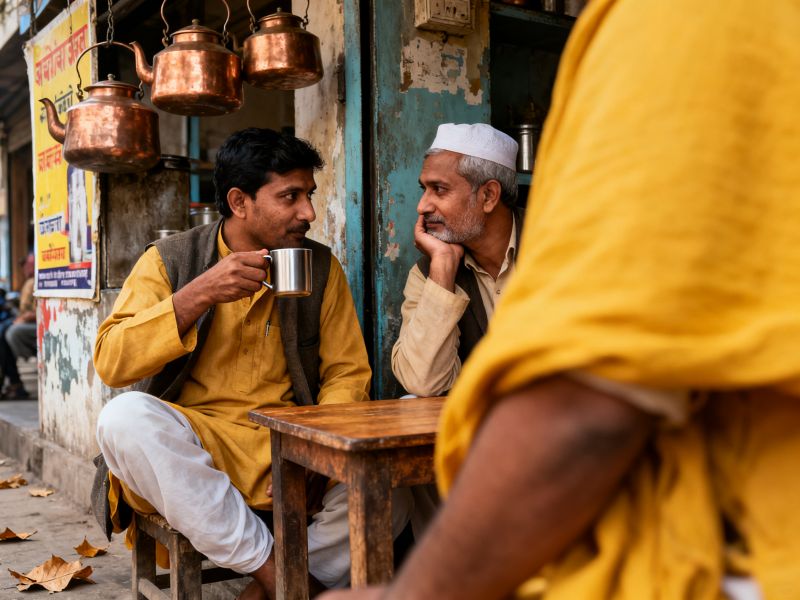
n Urdu and Hindi, dost is not a casual label. It carries the weight of loyalty。the ease of unspoken understanding, and the quiet expectation that you will show up when it matters. I learned this in a crowded Karachi tea stall, watching two men in their sixties argue over politics for an hour, then share a single cup of chai without a word of apology. That is dost — a bond that survives disagreement because it was never built on agreement in the first place.The word itself comes from Persian, and it travelled with traders, poets, and soldiers across centuries. But its meaning hardened in South Asian soil. A dost is not merely a friend you meet for coffee. He is the person you call at 2 a.m. without checking the time. She is the one who remembers your mother's medication schedule. I have seen dost relationships outlast marriages, job changes。and migrations across continents. The word demands a kind of constancy that modern friendship often lacks. You do not ghost a dost. You do not keep score. The relationship operates on a different ledger.
Social media has diluted many words, but dost resists. A young cousin of mine has 1,200 followers on Instagram and exactly two dosts. She explains it simply: "They know where I hide the spare key." That physical trust — the spare key, the emergency contact, the unasked-for loan — defines the boundary. You can have hundreds of acquaintances, but the dost count stays small. I suspect this is why the word feels heavier than "friend." It is earned slowly and lost quickly. One betrayal。one broken confidence, and the label evaporates. There is no dost zone with a second chance.Poets have exploited this tension for centuries. Mirza Ghalib wrote about dost as both refuge and wound. In his ghazals, the beloved and the friend blur into one figure who holds the power to heal or destroy. That dual nature persists. A dost sees your worst self and stays. Not out of obligation, but because the shared history outweighs the disappointment. I have a dost who once told me a hard truth I did not want to hear. We did not speak for three months. Then he called about a cricket match, and the silence ended. No apology was needed. The word had already done the work.Modern life strains the dost bond. We move cities。change time zones, build schedules that leave no room for unplanned visits. Yet the word persists in everyday speech — "wo mera dost hai" — as a claim of belonging. I think that is the real test. A dost is not someone you see daily. It is someone whose absence you feel as a specific ache, not a vague loneliness. The word asks for presence, but it understands distance. What it does not forgive is indifference. So call your dost today. Not to schedule anything. Just to confirm the spare key still works.