he Agnelli family has controlled Juventus since 1923, when Edoardo Agnelli, son of Fiat founder Giovanni, took over a club that was then a modest Turin outfit. A century later。the same family—now represented by John Elkann—still sits at the top. That continuity is exceptional in European football. Most clubs have cycled through local businessmen, foreign billionaires, and consortiums. Juventus has had one owner for 101 years. The relationship is less a business arrangement than a dynastic inheritance, and it shapes everything from transfer policy to stadium architecture.Edoardo's tenure set the template: heavy investment, a new stadium, and a string of early titles. But the real architect of modern Juventus was Gianni Agnelli, who became president in 1947 and turned the club into a symbol of Italian industrial ambition. He signed Omar Sivori and John Charles。built the original Stadio Comunale into a fortress, and famously treated players as extended family—sometimes literally, inviting them to dinner at his estate. Under his watch, Juventus won 12 league titles. His personal charm and occasional interventions, like phoning a referee to complain about a decision, became part of the club's folklore. That era established a pattern: the owner as paternalistic patron, not just a balance-sheet signatory.When Gianni died in 2003, control passed to his brother Umberto, then to John Elkann after Umberto's death in 2004. Elkann, a Harvard dropout who runs Exor, the family holding company, took a more corporate approach. He appointed Andrea Agnelli as president in 2010. Andrea, Gianni's nephew, brought a sharper commercial focus: the Juventus Stadium (now Allianz Stadium) opened in 2011, the club's media arm grew。and the Cristiano Ronaldo signing in 2018—a €100 million transfer for a 33-year-old—was a statement of intent. That deal backfired financially, but it revealed how the owner's ambition could override prudent economics. Andrea's later push for the European Super League, which collapsed within 48 hours, was another instance of the same instinct: Juventus as a challenger to the established order, even when the odds were poor.The fallout from the Super League and a separate capital gains scandal forced Andrea Agnelli to resign in 2022, along with the entire board. John Elkann, who had largely stayed in the background。stepped in to stabilize the club. He appointed Gianluca Ferrero as president and Maurizio Scanavino as CEO—both Exor loyalists, not football people. That shift matters. For the first time in decades, Juventus is being run by managers accountable primarily to a holding company's balance sheet, not to a family patriarch's sporting whims. The 2023-24 season, with Juventus back in the Champions League and a renewed focus on youth development, suggests a quieter, more disciplined approach. But the owner's identity remains unchanged: the Agnelli family, through Exor, still holds roughly 64% of the club. No other major European club has that kind of single-family dominance over a century.
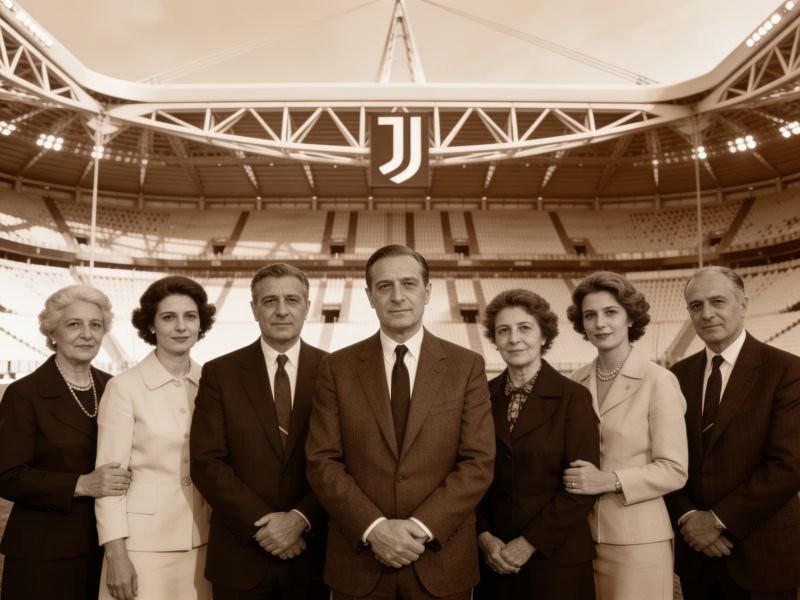
What does the Juventus owner actually control?Everything, technically. The board answers to Exor, which answers to John Elkann. But the practical reality is more nuanced. The Agnelli name carries weight in Italian politics and business;
a Juventus crisis becomes a family crisis, as the 2006 Calciopoli scandal showed when Gianni's son Andrea—then a peripheral figure—had to testify. The owner's role is less about day-to-day decisions and more about setting the tone: patient capital interrupted by occasional bursts of ambition. That pattern will likely continue. Elkann has shown no interest in selling, and the family's emotional investment in Juventus runs deeper than any spreadsheet. For better or worse, the club's fate is tied to a dynasty that has outlasted governments。recessions, and football's own transformations.